How to Make a Mood Board for Your Video Project (Step-by-Step Guide)
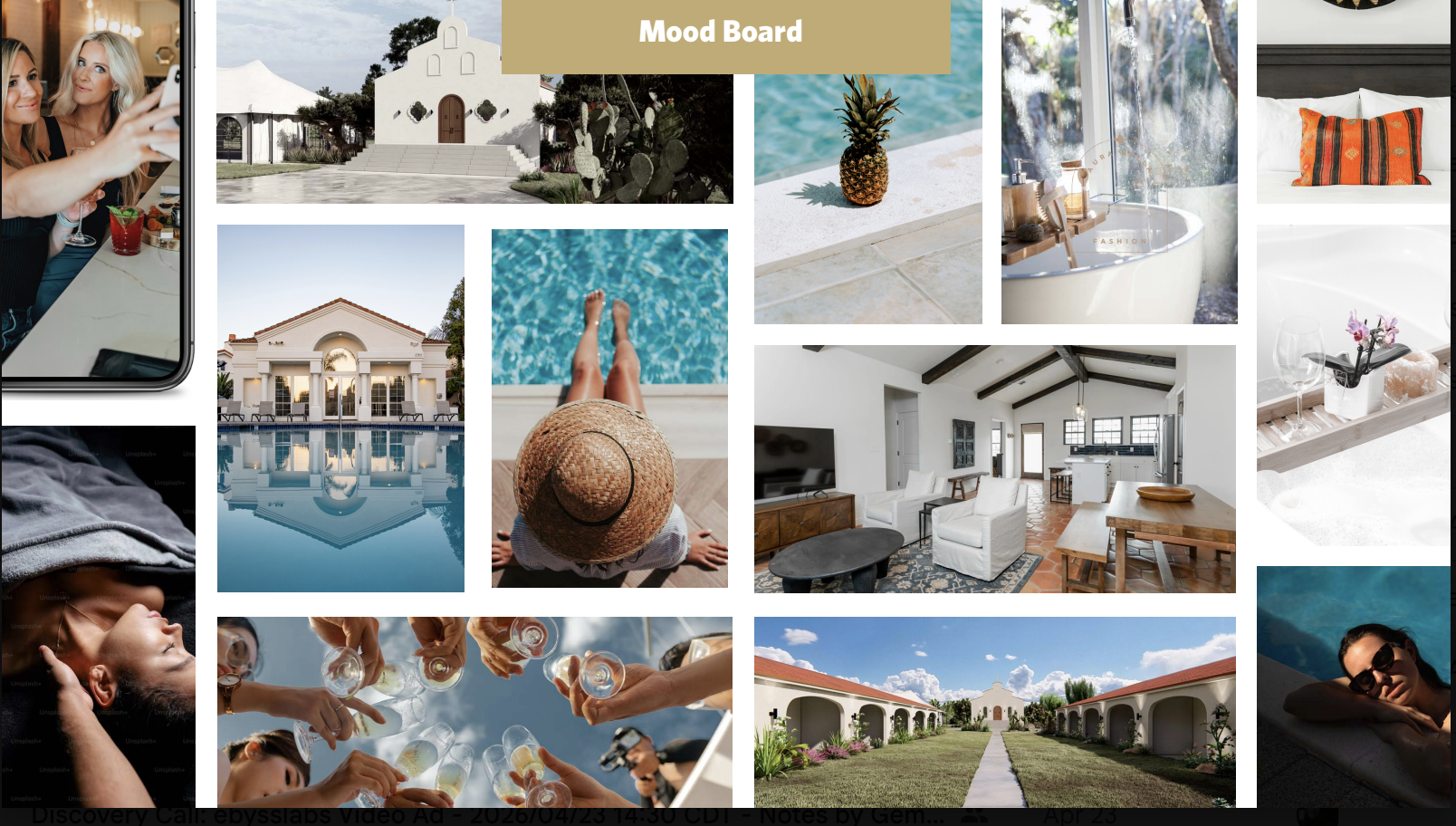
from La Palmilla brand campaign
Before a single camera rolls, the best video productions start with one thing, a clear visual direction. At Arcpoint Studios, mood boards are one of the first things we build on every project. They’re how we translate a client’s ideas into a visual language that everyone on the team understands. From the director to the gaffer to the client in the room, a great mood board gets everyone seeing the same vision before we ever hit record.
Here’s how we do it, step by step.
What Is a Mood Board for Video Production?
A video production mood board is a curated collection of images, colors, textures, fonts, and visual references that capture the tone, style, and emotional feel of a project. It serves as a shared creative framework for everyone involved, from the director and cinematographer.
A solid mood board typically includes:
Film stills or video screengrabs
Color palettes and lighting examples
Texture and set design inspiration
Typography or motion graphics samples
Wardrobe or styling ideas
Location references
Think of it as your visual North Star, not about perfection, but about direction.
Why a Mood Board Is Essential for Your Video Project
Mood boards aren’t just a creative exercise; they’re one of the most practical tools in our pre-production process. A strong mood board:
Aligns your entire video production team around a shared vision
Ensures visual consistency across lighting, color, wardrobe, and set design
Guides choices around camera work, composition, and movement
Saves time during pre-production by clarifying direction early
Helps clients or stakeholders visualize the final outcome
On fast-moving commercial shoots with tight deadlines, that early alignment isn’t just helpful, it’s essential.
How to Make a Mood Board for a Video Project
1. Define Your Creative Direction
Before pulling a single image, get clear on the concept. We always start here with a conversation, not a Pinterest board. Ask yourself:
What story are we telling?
Who is the target audience?
What emotional response do we want to evoke?
Your answers determine whether the visual tone is bold and cinematic, playful and bright, minimal and modern, energetic and fast-paced, or warm and intimate. Creative direction comes first, visuals follow.
2. Collect Visual References
Once the direction is clear, we pull inspiration from:
Movies, TV shows, and commercials (film stills or screengrabs)
Social platforms like Pinterest, Instagram, or Behance (if you know you know 😉)
Photography (editorial, architecture, lifestyle, or product shoots)
Color swatches or lighting samples
Fashion and styling references for wardrobe and on-screen talent direction
Pro tip: We always keep budget and production scope in mind at this stage, a great mood board inspires without setting unrealistic expectations.
3. Organize Your Mood Board by Category
A well-structured mood board communicates faster than a well-written brief. We organize ours into clear visual categories like:
Color Palette – Sets the emotional tone
Lighting Style – Natural, dramatic, high-key, low-key, stylized
Wardrobe & Styling – Talent looks, brand color alignment
Locations – Visual references for real-world spaces
Camera Style – Shots, framing, or motion techniques
Typography & Graphics – Fonts, logos, or animation examples
You can use digital tools like Canva, Milanote, or Adobe Illustrator, or go old-school with a physical board.
On our Traces campaign for Dallas County Health & Human Services, this step was critical; we used the mood board to lock in the visual thread that would carry every scene: gritty textures, high-contrast lighting, and blue woven throughout wardrobe, props, and set pieces to echo the pills themselves. That early direction became the foundation for the campaign’s full lookbook, carrying the same tone from the mood board to final delivery.
5. Share Your Mood Board with the Team
Once your mood board is ready, we walk through it with the full team: director, producer, DP, art director, or client. This is where the real value happens! Questions get answered, adjustments get made, and everyone walks away aligned before moving into the next step.
The finalized mood board serves as the creative reference for the entire production, from location scouting through color grading.
Final Thoughts: Mood Boards Make Better Videos
A strong video starts with strong visual planning. A mood board isn’t a nice-to-have; it’s a core pre-production tool that shapes every decision from casting to locations to color grading and final delivery.
Ready to bring your next video concept to life? Contact the Arcpoint Studios team today or explore our Fort Worth studio rental space to see how we support productions across the DFW metroplex - from concept through final delivery.